
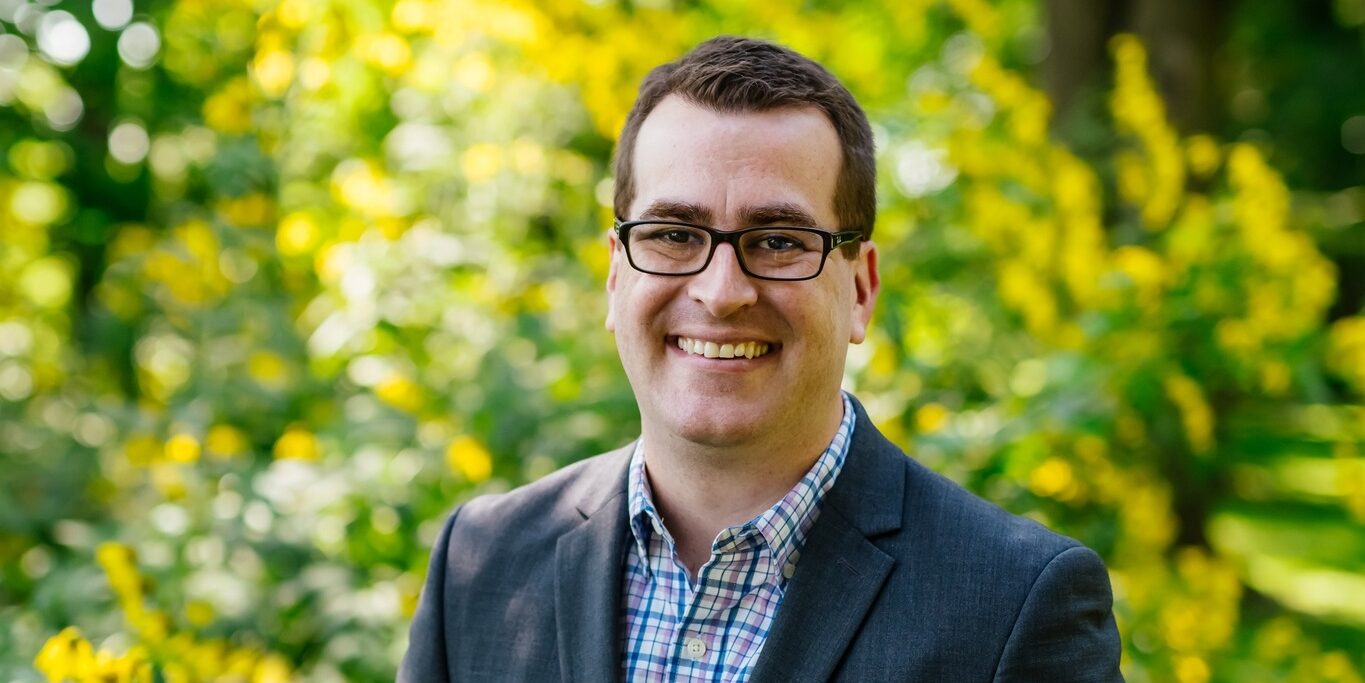
BROOKFIELD, WI — Mike Hallquist has represented District 4 on the Brookfield Common Council since 2020. This spring, he’s asking residents to give him a promotion — from alderman to mayor of one of Waukesha County’s largest cities.
By day, Hallquist works as an Enterprise Data Architect at GE Healthcare. He grew up in Hartland, attended UW-Milwaukee for his undergraduate degree and the University of Southern California for his master’s. He and his wife Amanda, a nurse practitioner, are raising two children in Brookfield. On the council he has served on the Finance Committee, Plan Commission, and Board of Public Works.
His campaign bills him as an independent voice focused on transparency, smart development, and fiscal responsibility. His record in office, however, raises some questions worth asking before April 7.
Party Affiliation
Hallquist’s mayoral run is technically nonpartisan, as all Wisconsin municipal races are. But Hallquist is a dues-paying member of the Waukesha County Democratic Party — a fact his campaign materials don’t mention.
In October 2024, weeks before a presidential election that Waukesha County would deliver to Donald Trump by double digits, Hallquist posted on social media describing a Trump campaign rally as a “final pitch for a fascist American future.” The post was public. The constituents he was describing were his own.
Calling for Congressman Fitzgerald’s Resignation
In January 2021, following the certification of the 2020 presidential election, Hallquist sent a public letter to Congressman Scott Fitzgerald demanding he resign from office. Fitzgerald had voted to object to electoral vote certification in Pennsylvania and Arizona.
In the letter, Hallquist wrote that Fitzgerald had shown “a complete and unflinching desire to disenfranchise your constituents.” He told a local outlet at the time: “We are beyond hypothetical violence. We are now in the era of real violence and real unrest.”
Fitzgerald did not resign. He was reelected.
The Affordable Housing Fight
In January 2023, the Brookfield Common Council took up final approval of the Flats at Bishops Woods — a 203-unit affordable housing development funded through a Wisconsin state grant program under Governor Tony Evers. The project would offer rents to residents earning between 40 and 80 percent of the area median income.
During that meeting, Alderman Kris Seals made comments opposing the project that the city attorney flagged as a potential violation of the Fair Housing Act. Hallquist, a supporter of the development, responded by drafting a formal censure resolution against Seals — an uncommon step that would have officially reprimanded his colleague before the full council.
When the resolution came to a vote, it failed to receive even a second. It was rejected 13-1. Of the residents who signed up for public comment that evening, the majority spoke against the censure.
In a statement afterward, Hallquist said the council had chosen to enable “housing discrimination.” He described his lone dissent as standing “in lockstep with the members of our community who know wrong from right.”
A Broader Pattern
The censure vote was not an isolated outcome. In 2024, Hallquist was one of three aldermen to support installing absentee ballot drop boxes ahead of the November presidential election. He characterized colleagues who raised security concerns as pushing “unsubstantiated election denialism-like” claims. The full council voted 11-3 against the measure. In 2021, Hallquist cast the lone dissenting vote — 13-1 — against the council’s aldermanic redistricting map, objecting to a process he said took incumbency addresses into account.
Across five years on the council, Hallquist has frequently found himself far outside the majority on contested issues.
His Platform
Hallquist is running on sustainable budgets, economic redevelopment, improved parks, and government transparency. He has pointed to his work helping expand Fire and EMS services for the first time in 30 years and his push for infrastructure funding as evidence of what he can accomplish. He argues that Brookfield, as a nearly built-out city, needs fresh thinking on redevelopment to keep its commercial corridors competitive.
Brookfield residents will have the chance to weigh that record and that platform when they head to the polls April 7.
Spring election: April 7, 2026.