
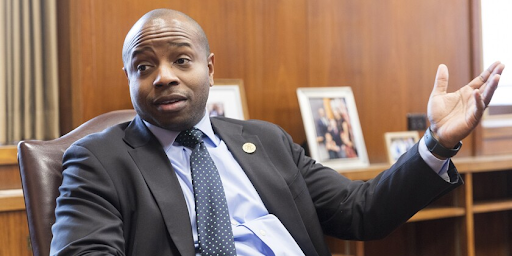
Milwaukee drivers could soon be paying more just to keep their cars on the road. Mayor Cavalier Johnson has proposed a $10 hike to the city’s wheel tax to help close a looming budget gap — a move critics say shifts the city’s financial mismanagement onto taxpayers.
The mayor’s office introduced the initiative through a substitute ordinance that would raise the annual vehicle registration fee by $10, totaling $40. This is in addition to Wisconsin’s vehicle registration fee, which is $85 a year.
If council members pass the ordinance, the city could gain $2.7 million, but only if Johnson’s proposed budget is approved. The ordinance will be considered independently from the vote on Johnson’s budget.
The local government can use revenue from wheel taxes to pay for road maintenance and offset property taxes, according to a Wisconsin Policy Forum report.
But several council members are concerned about the lack of communication regarding the proposed ordinance. (RELATED: State Senator Accuses Milwaukee of Repurposing Funds for Police for Raises Elsewhere)
Ald. Scott Spiker, member of the finance committee, is opposed to the ordinance and said there was no communication with the Common Council about it.
“Rather than pursuing imaginative solutions to persistent problems, he [Johnson] opened up the dusty playbook from the previous administration and called in a familiar set of plays,” Spiker wrote in a statement.
Because of the quick turnaround, the mayor’s push to implement this is “putting a gun to the council’s head,” Ald. Peter Burgelis told the Milwaukee Journal Sentinel.
Ald. Marina Dimitrijevic, chair of the finance committee, is undecided but expressed concerns regarding the timing of the ordinance, which requires council members to vote on it prior to voting on the budget proposal.
The city’s Finance and Personnel Committee will vote on the ordinance Oct. 8, while the budget process won’t conclude until the end of November. (RELATED: Milwaukee Mayor Shielded From Questions by Police Union During Arbitration)
If the ordinance’s implementation is postponed, the city could face a budget shortfall of around $250,000, according to Nik Kovac, the city’s budget director.