
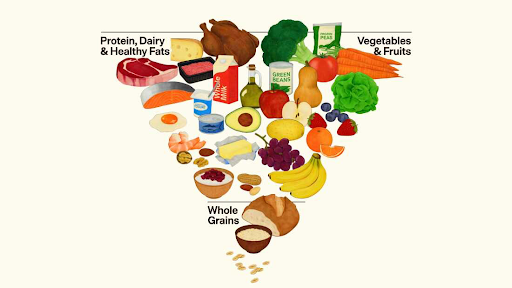
The federal government unveiled a sweeping overhaul of national nutrition guidance Wednesday with the release of the Dietary Guidelines for Americans 2025–2030, introducing a redesigned food pyramid that reflects a significant shift in how officials say Americans should eat.
The updated guidelines were jointly released by the U.S. Department of Health and Human Services and the U.S. Department of Agriculture, marking what Health Secretary Robert F. Kennedy Jr. described as the “most significant reset of federal nutrition policy in history.”
Unlike decades of traditional guidance that emphasized grains as a dietary foundation, the newly designed inverted food pyramid places high-quality protein, healthy fats, fruits, vegetables, and full-fat dairy at the wide top. Refined and ultra-processed grains now occupy the narrow base, signaling a deliberate move away from heavily processed carbohydrates such as sugary cereals, white bread, and packaged snack foods.
Under the new guidelines, Americans are encouraged to consume protein at every meal, drawing from both animal and plant sources including eggs, seafood, lean meats, nuts, and legumes. Whole fruits and vegetables are emphasized as daily staples, while highly processed foods—defined by added sugars, refined carbohydrates, and artificial additives—are strongly discouraged.
Federal health officials said the changes are intended to better reflect modern nutritional research and growing concerns about chronic disease. High consumption of ultra-processed foods has been linked in multiple studies to increased risks of obesity, type 2 diabetes, hypertension, and cardiovascular disease, conditions that continue to strain the U.S. health care system. (RELATED: Residents See Rising Taxes, Blame Evers’ 400-Year Veto)
The redesigned pyramid has drawn early support from health professionals and commentators who argue the shift aligns federal guidance more closely with evidence-based nutrition. Stanford neuroscientist Andrew Huberman publicly praised the emphasis on nutrient-dense, whole foods, suggesting the model better reflects how diet influences metabolic and long-term health outcomes.
Beyond individual dietary choices, the new guidelines carry significant policy implications. They serve as the foundation for federal nutrition standards governing school lunches, military meals, and SNAP food assistance programs. Officials say the updated framework could expose a new generation of children to healthier meals in schools while improving nutrition for military service members.
The Trump administration has framed the updated guidelines as part of a broader effort to address declining health outcomes and rising diet-related disease nationwide, arguing that encouraging real, minimally processed foods could yield long-term benefits for both public health and federal spending. (RELATED: Alleged Daycare Break-In Sparks Doubts After Fraud Exposé)